
Navigating Complex Regional Dynamics
As Middle East tensions continue to escalate with multiple conflicts and geopolitical rivalries, India has emerged as a master of balanced diplomacy, maintaining strategic relationships with all major players while safeguarding its core national interests. With approximately 9 million Indian expatriates working and living across the region, New Delhi's diplomatic approach has become increasingly sophisticated, blending pragmatism with principle in one of the world's most volatile regions.
The Middle East's strategic importance to India cannot be overstated. The region accounts for nearly two-thirds of India's crude oil imports, hosts millions of Indian workers who remit billions of dollars annually, and serves as a crucial gateway for India's expanding economic and geopolitical ambitions. Yet, the region's complex web of alliances, rivalries, and conflicts presents significant challenges for any external power seeking to maintain influence without taking sides.
India's approach, often described as "multi-alignment" or "strategic autonomy," has allowed it to navigate these treacherous waters with remarkable dexterity. Unlike many Western powers that have been forced to choose sides in regional conflicts, India has managed to maintain robust relationships with Iran, Saudi Arabia, the UAE, Israel, and other key players simultaneously. This balancing act has not only protected India's immediate interests but also enhanced its stature as a responsible global power.
"India's strength lies in its ability to engage with all partners while protecting its own interests."
— S Jaishankar, External Affairs Minister
Protecting the Indian Diaspora
At the heart of India's Middle East policy is the protection of its 9 million expatriates, the largest overseas Indian community anywhere in the world. These workers, primarily employed in construction, healthcare, IT, and domestic services, send home over $87 billion annually in remittances, making them crucial to India's economy. The safety and security of this community has been a non-negotiable priority for Indian diplomacy.
During times of heightened tensions, such as the Yemen conflict, the Israel-Palestine escalations, and the recent Red Sea crisis, India has demonstrated its commitment to its citizens through swift diplomatic interventions and evacuation operations. The Indian Navy's role in securing maritime routes in the Gulf of Aden and the Red Sea has been particularly crucial, ensuring safe passage for Indian workers and goods.
India's expatriate protection strategy includes comprehensive consular services, emergency response mechanisms, and close coordination with host governments. The establishment of the Indian Community Welfare Fund and various bilateral agreements for worker protection reflect the government's proactive approach. These measures have not only safeguarded Indian lives but also enhanced India's diplomatic leverage in the region.
The expatriate community's welfare has also influenced India's broader foreign policy decisions. For instance, India's cautious approach to certain regional conflicts is partly driven by the need to avoid jeopardizing the safety of its citizens. This human-centric approach has earned India considerable goodwill among Middle Eastern populations and governments alike.
Strategic Relationships Across the Spectrum
India's diplomatic balancing act is evident in its relationships with competing regional powers. With Saudi Arabia and the UAE, India shares deep economic ties, defense cooperation, and strategic partnerships. The Comprehensive Strategic Partnership with the UAE and the Strategic Partnership with Saudi Arabia include joint military exercises, investment agreements, and cooperation in counter-terrorism and energy security.
Simultaneously, India maintains a robust relationship with Iran, its gateway to Central Asia and a key partner in regional stability. Despite international sanctions, India has continued to engage with Iran through the Chabahar Port development and energy cooperation. This relationship provides India with alternative access routes and strengthens its position in Afghanistan and Central Asia.
India's ties with Israel have grown exponentially in recent years, encompassing defense cooperation, technology transfer, and intelligence sharing. The relationship, once kept low-profile due to Arab sensitivities, has now become a cornerstone of India's Middle East strategy. Joint ventures in defense production and agricultural technology have strengthened this partnership.
Even with countries like Qatar and Oman, India maintains special relationships. Qatar hosts a significant Indian military presence and serves as a hub for Indian investments, while Oman provides crucial maritime access through the Strait of Hormuz. This web of relationships ensures that India has multiple partners across the region, reducing its dependence on any single country.
Energy Security and Economic Interests
Energy security remains the cornerstone of India's Middle East engagement. The region supplies about 65% of India's crude oil and significant amounts of natural gas. To diversify its energy sources and reduce vulnerability to supply disruptions, India has invested heavily in strategic partnerships and infrastructure projects across the Gulf.
The recent agreements with Saudi Arabia for energy cooperation and the investments in UAE's renewable energy sector reflect India's efforts to secure long-term energy partnerships. The International Solar Alliance, co-founded by India, has found enthusiastic partners in Middle Eastern countries looking to transition to clean energy.
Economic cooperation extends beyond energy to include trade, investment, and infrastructure development. The UAE has emerged as India's largest trading partner in the Gulf, while Saudi Arabia's Vision 2030 has opened new avenues for Indian investments. These economic ties provide India with additional leverage in its diplomatic engagements and help stabilize the region.
India's infrastructure projects, such as the development of ports and railways in Iran, Oman, and the UAE, are creating new economic corridors and enhancing connectivity. These projects not only serve India's economic interests but also contribute to regional development and stability.
The Art of Diplomatic Balancing
India's diplomatic balancing act requires constant calibration and strategic foresight. The country's approach is guided by the principle of "issue-based" engagement rather than ideological alignment. This allows India to cooperate with different countries on different issues without being constrained by broader geopolitical rivalries.
For instance, India participates in joint military exercises with both the US and Russia in the region while maintaining its strategic autonomy. Similarly, it engages with both Iran and its Gulf Arab neighbors despite their mutual rivalries. This flexibility has enabled India to maximize its influence and protect its interests effectively.
The key to India's success lies in its emphasis on mutual respect, non-interference in internal affairs, and focus on shared interests. By positioning itself as a reliable partner rather than a competitor, India has built trust across the region. This approach has been particularly effective in mediating between conflicting parties and facilitating dialogue.
India's growing military presence in the region, including naval deployments and joint exercises, has enhanced its ability to protect its interests and contribute to regional security. The country's participation in anti-piracy operations and humanitarian assistance has further strengthened its diplomatic position.
Recent Developments and Initiatives
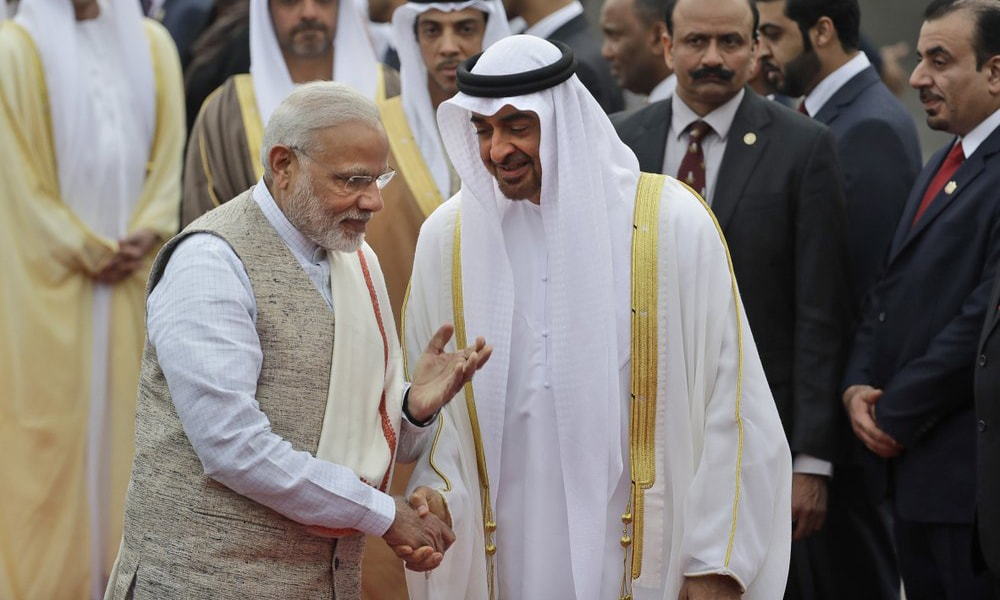
Recent months have seen India intensify its diplomatic engagements across the Middle East. Prime Minister Narendra Modi's visits to Saudi Arabia, the UAE, and Qatar have resulted in significant agreements on defense, energy, and investment. The establishment of the India-Middle East-Europe Economic Corridor represents a major initiative to enhance connectivity and economic cooperation.
India's role in facilitating dialogue between Iran and Arab countries has been noteworthy. Despite the Abraham Accords normalizing relations between Israel and several Arab nations, India has maintained its balanced approach, engaging with all parties while encouraging regional dialogue.
The recent tensions in the Red Sea have tested India's diplomatic skills. By coordinating with multiple countries to ensure safe passage for commercial vessels and evacuating Indian nationals when necessary, India has demonstrated its crisis management capabilities. These efforts have enhanced India's reputation as a responsible maritime power.
India's vaccine diplomacy during the COVID-19 pandemic and its humanitarian assistance during various crises have further strengthened its soft power in the region. These initiatives have created goodwill and positioned India as a partner in addressing common challenges.
Future Prospects and Challenges
Looking ahead, India's Middle East diplomacy faces both opportunities and challenges. The region's evolving geopolitics, including the shifting alliances and the rise of new powers, will require continued diplomatic agility. Climate change, water scarcity, and economic diversification are emerging areas where India can play a constructive role.
The growing Chinese presence in the region presents both challenges and opportunities for India. While competition for influence is inevitable, India's established relationships and focus on mutual benefits provide it with a competitive advantage. The Belt and Road Initiative's expansion into the Middle East will require India to adapt its strategies while protecting its interests.
India's success in maintaining balanced relationships has positioned it as a potential mediator in regional conflicts. Its growing economic and military capabilities, combined with its principled approach to diplomacy, make it an indispensable partner for Middle Eastern countries seeking to navigate complex geopolitical waters.
As the Middle East continues to evolve, India's balanced diplomacy will be crucial not just for its own interests but for regional stability. By maintaining strategic relationships with all parties while protecting its expatriate community, India has set a model for diplomatic engagement in a multipolar world. This approach has not only safeguarded India's interests but also enhanced its global stature as a responsible power committed to peace and prosperity in the Middle East.


